Premier Center for Hair Restoration
Mega Case Hair Transplants
When Standard Sessions Aren’t Enough
If you’re dealing with hair loss that has spread across your crown, hairline and temples all at once, a small handful of grafts scattered here and there is not going to get you where you want to be. You need a team that knows how to work at scale, which is exactly what a mega case hair transplant is designed to do. Unfortunately, many patients researching mega case hair transplant treatments have difficulty finding highly experienced providers.
At Premier Center for Hair Restoration in Pittsburgh, PA, Dr. Brian Heil and his team have built a reputation for taking on some of the largest hair transplant cases in the country. This page walks through what a mega case actually involves, who tends to need one, and why the planning behind these procedures looks different from a standard session.
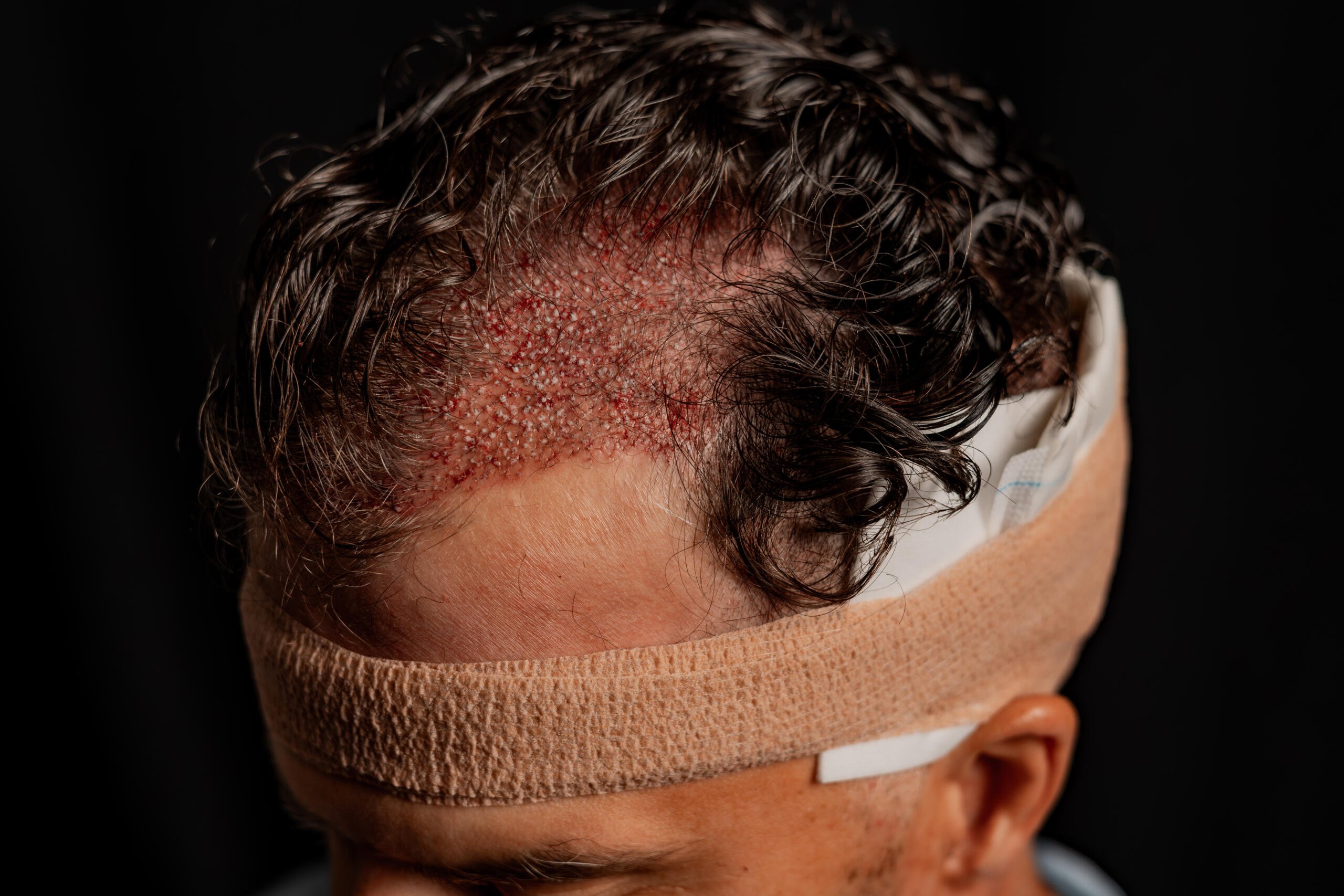
What Are Mega Case Hair Transplants?
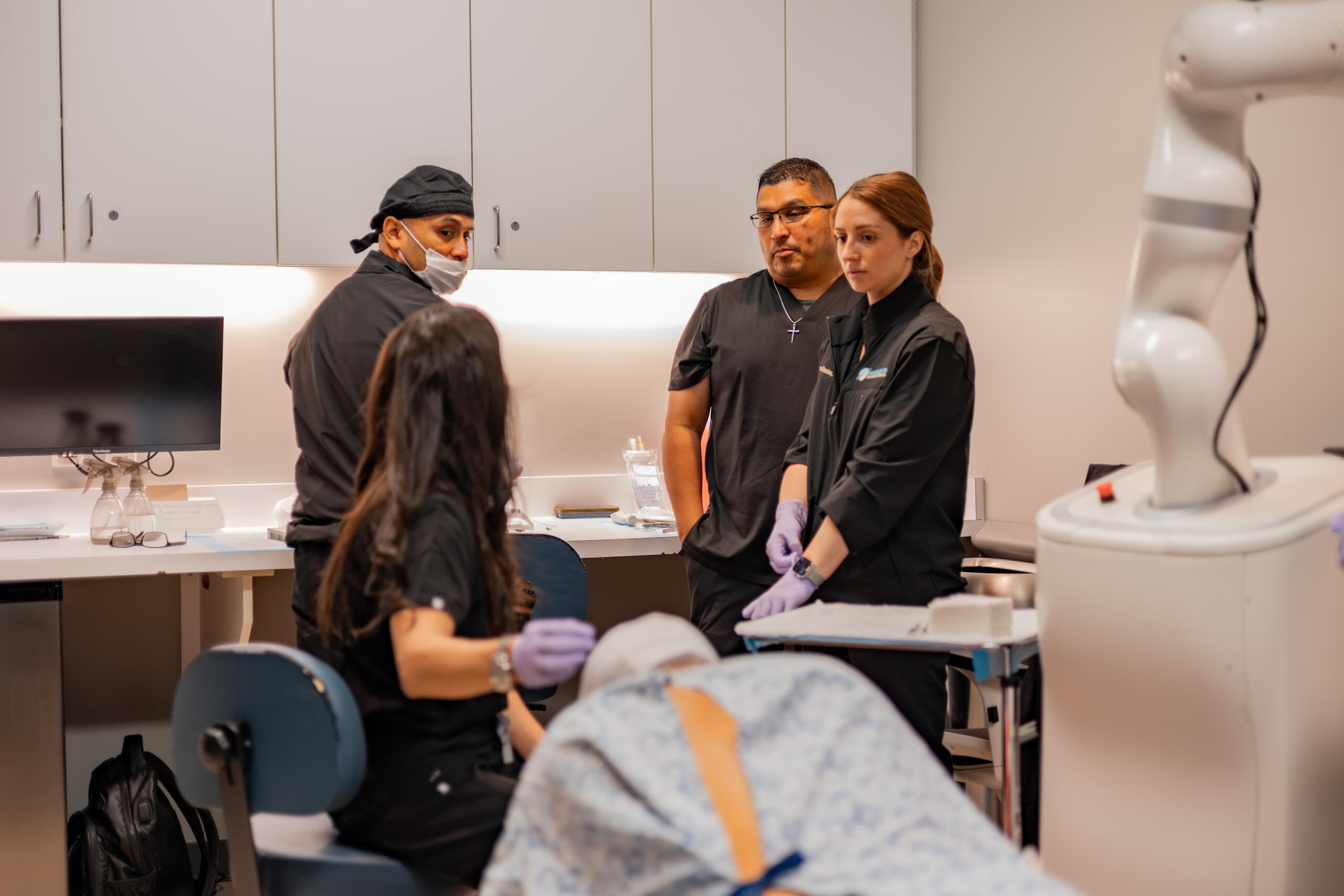
Who Are Mega Case Hair Transplants For?
Mega case hair transplants are typically recommended for patients dealing with extensive hair loss across multiple areas of the scalp, rather than a single receding hairline or one thinning patch. That usually points to later-stage male pattern baldness, though the approach isn’t limited to men. Female patients with more diffuse or advanced hair loss can be candidates as well; our breakdown on hair transplant and restoration for women covers how those cases tend to differ.
A few patterns show up consistently in mega case candidates:
- Advanced hairline recession paired with crown thinning or a growing bald spot
- Loss that covers the frontal, mid-scalp and vertex regions at the same time
- A history of small, incremental transplants or other treatment attempts that never fully addressed the problem
- A strong, healthy donor area capable of supplying thousands of grafts without being overharvested
That last point about a healthy donor area is essential. Gauging the quality and quantity of donor supply before committing to a mega case hair transplant allows our team to complete the job with more cohesive results. Part of what makes a mega case work is knowing exactly how far the donor area can be pushed, which is a judgment call that can only be made well with extensive experience.
Patients recovering from a disappointing transplant performed elsewhere, including budget procedures done abroad, sometimes end up needing a mega case simply to correct what wasn’t handled properly the first time around.
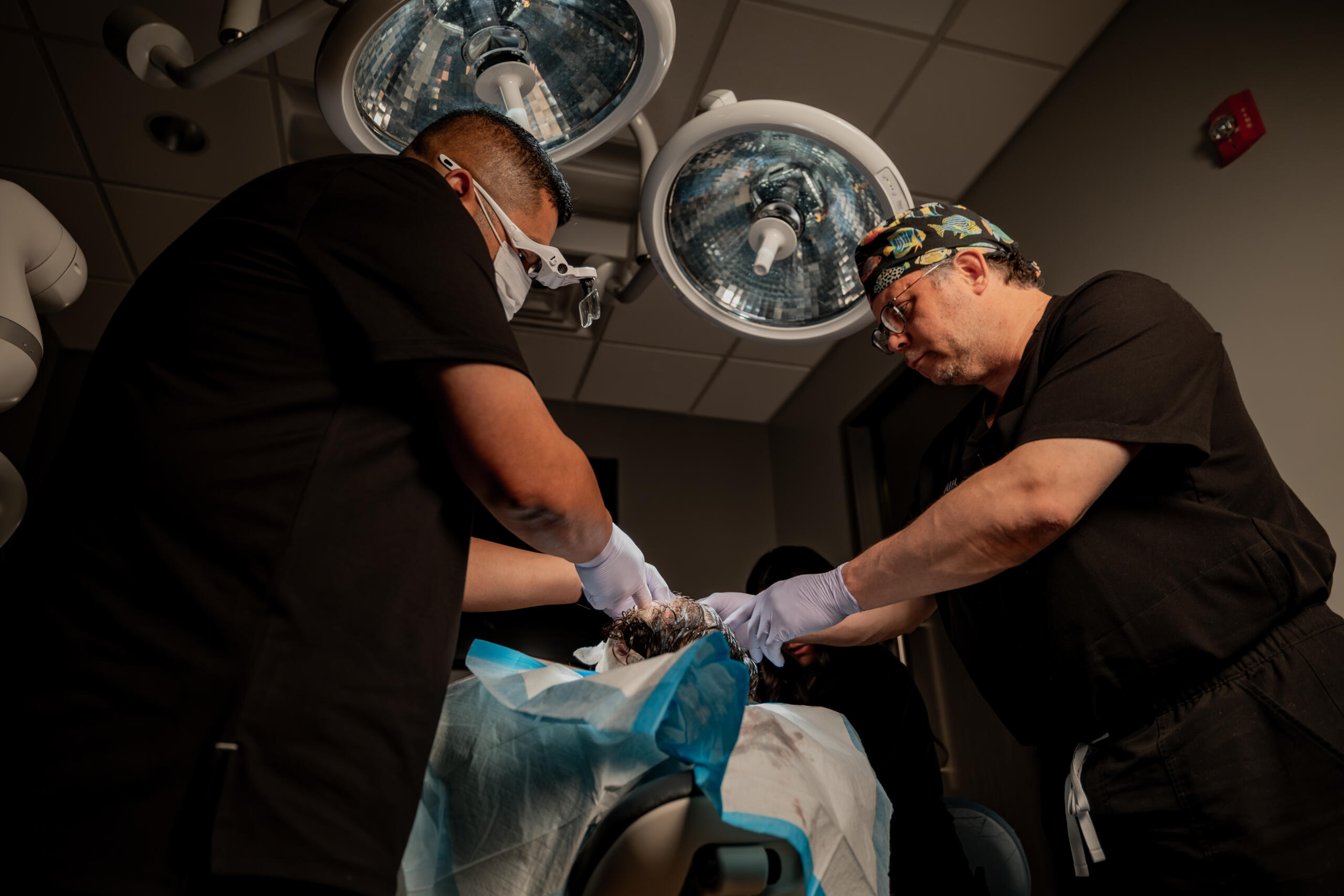
How Does the Mega Case Hair Transplant Experience Differ From Standard Hair Transplantation?
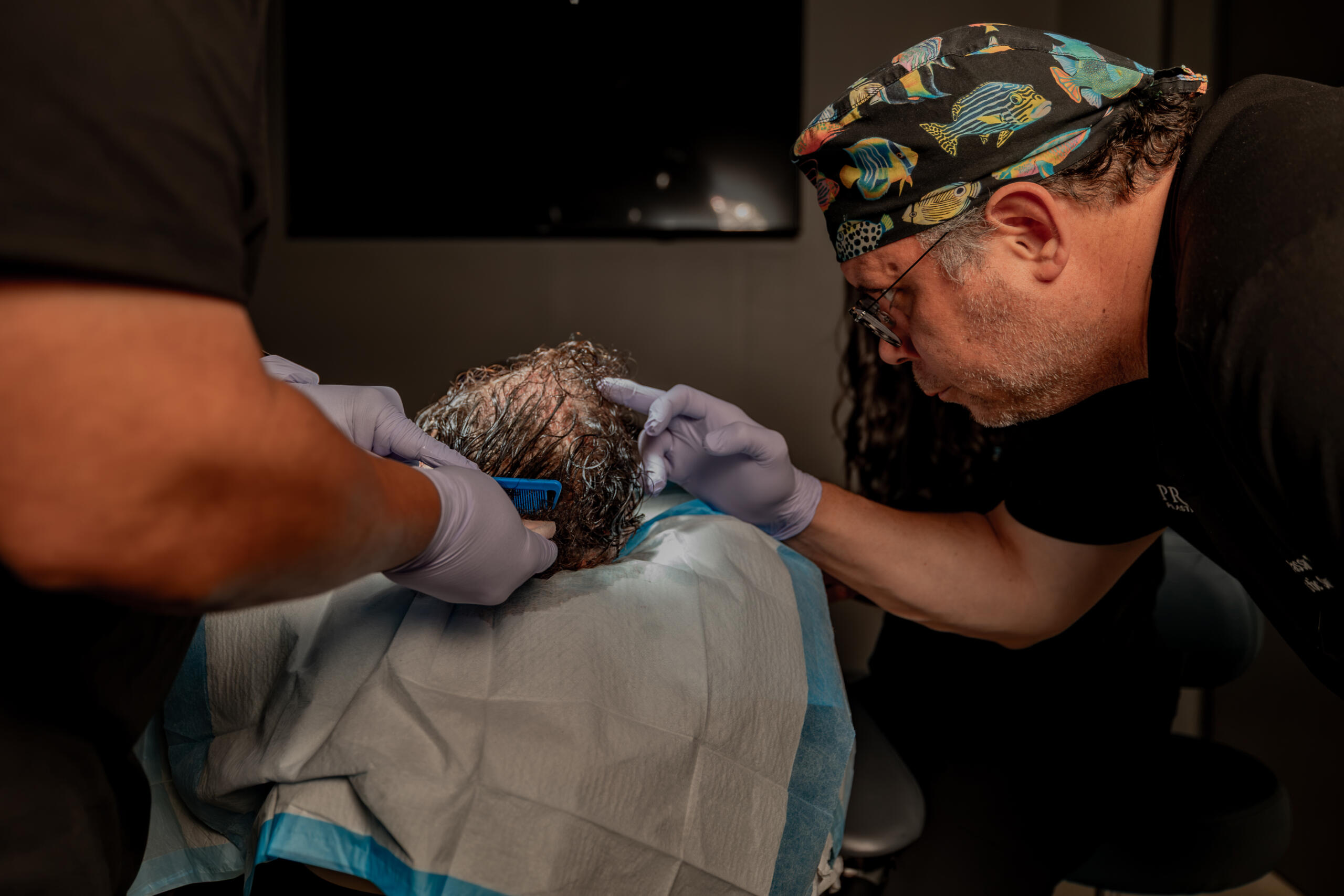
The mega case experience differs from a standard hair transplant mainly in how much planning happens upfront and the length of the procedure itself. The technology used and the underlying mechanism work the same way as they do in other FUE procedures.
Step 1:
The Consultation Process
Planning a mega case starts long before the actual procedure takes place. Dr. Heil spends a significant amount of time with these patients working out how many grafts the donor area can realistically supply with microscopic imaging tools, which zones need to be covered first, and how many total procedures it will take to get there.
Some patients complete their restoration in one longer session lasting several hours. Others move through it in stages, spaced months apart, so the donor area has time to recover between rounds. Either way, the planning process must be collaborative and comprehensive to leave patients with a realistic picture of the finished result and a clear timeline for reaching it. You can learn more about the general shape this process takes on our hair transplant FAQ page.
Step 2:
Treatment Day
Premier offers multiple FUE-based systems for graft harvesting and placement, and mega case patients may see any combination of them used, depending on their scalp and their goals.
The ARTAS Robotic Hair Transplant system uses robotic, algorithm-guided harvesting to identify and remove the best caliber follicles from the donor zone. Dr. Heil remains the only ARTAS provider in the tri-state region.
NeoGraft relies on a randomized, automated FUE system that moves quickly through the harvest process producing excellent grafts for placement.
The Premier experience often combines the two, pairing ARTAS-driven and NeoGraft-style harvesting to accommodate a large graft count faster and better than either system could manage on its own. For more on how graft count connects to the final look, our blog post on whether a hair transplant can increase hair density breaks it down in more detail.
For cases split across multiple sessions, our team often sequences treatment so the areas that affect appearance the most, usually the hairline and frontal area, get addressed in the earliest session.
Step 3:
Recovery After a Mega Case Procedure
Recovery after a mega case follows the same basic timeline as any FUE procedure, just stretched across a larger treated area. Patients can generally expect some scalp tenderness for the first week or so, followed by shedding of the newly transplanted hairs before real growth kicks in around the six month mark.
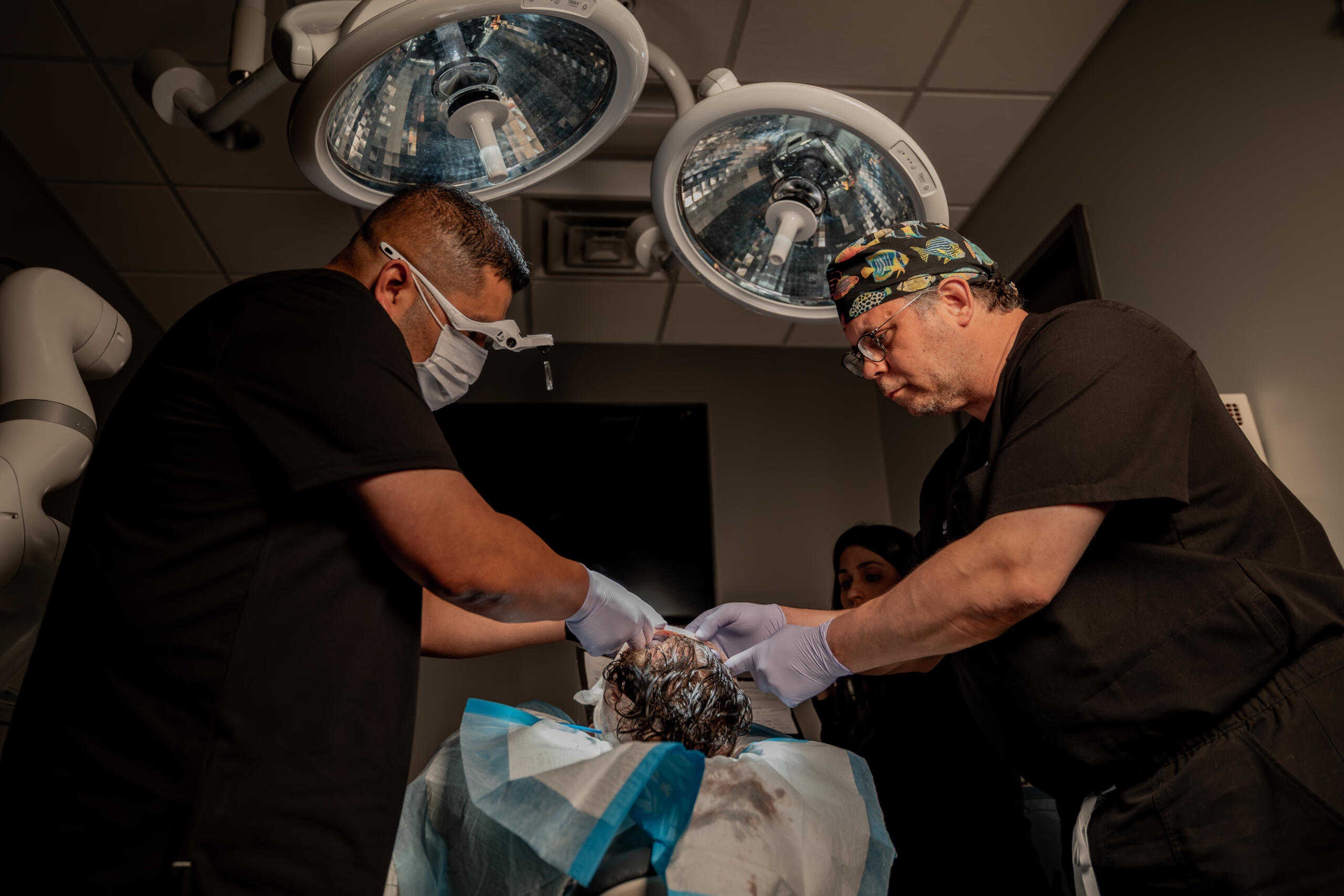
Why Trust Premier Center for Hair Restoration for a Mega Case Hair Transplant?
Premier Center for Hair Restoration is a preferred choice for mega case treatment because of the depth of experience behind every procedure, starting with Dr. Brian Heil. Dr. Heil is a board-certified plastic surgeon with more than 25 years in practice and multiple decades dedicated specifically to hair restoration. He’s been named a Castle Connolly Top Doctor for multiple consecutive years and recognized as a Top Beauty Doctor by New Beauty Magazine for five years running. He’s also been ranked third in the country by Venus Concepts for robotic hair transplantation, a distinction tied directly to his work with the ARTAS system.
Our support team is also highly experienced in handling mega case hair transplants. We’ve performed thousands of grafts without sacrificing accuracy, continually improving as a tenured team that knows what it takes to deliver the results you’re looking for.
Local sports figure Phil Bourque is among the patients who’ve shared his own hair restoration journey with Dr. Heil publicly, and his comments reflect the kind of coordinated, high-volume work our practice regularly takes on.
Patients also spend appointment day in Premier’s Man Cave, a waiting and recovery space designed with longer procedures in mind. Mega case sessions can run several hours, and the Man Cave gives patients a comfortable, private spot to relax with a movie or a nap while the team works.
Ready to Talk About Your Own Mega Case?
If your hair loss requires more than a small touch-up, we’re here to help you find out what an effective large-scale plan looks like for your scalp. Dr. Heil’s consultation process is built around giving you real numbers and a realistic understanding of the results you can expect. Call 412-709-3067 or schedule a consultation to start mapping out your own plan.
Frequently Asked Questions About Mega Case Hair Transplants
How many grafts count as a mega case hair transplant?
There’s no single universal cutoff, but most providers consider anything above 3,500 to 4,000 grafts in a single treatment plan to fall into mega case territory. The right number for any individual patient depends on donor supply and the extent of the areas being treated.
Will a mega case hair transplant require more than one session?
Often, yes. However the answer is complex and depends largely on donor availability. The Premier team is capable of doing over 4,000 grafts in a single day on a single patient with the adequate donor availability. However in other cases, extremely high graft counts can be frequently completed in two or more sessions, spaced months apart.
Does a mega case hair transplant hurt more than a standard procedure?
No. The FUE techniques used at Premier, including ARTAS and NeoGraft are performed under local anesthesia regardless of graft count, so a mega case shouldn’t feel more painful than a smaller session. Patients may notice more general tenderness in terms of surface area coverage simply because a larger area of the scalp is involved.
How long does it take to see results from a mega case hair transplant?
Transplanted hair typically sheds within the first few weeks before new growth begins around the three to four-month mark. For mega cases specifically, full results across every treated zone can take closer to 12 to 18 months to become fully visible, particularly if the plan involves more than one session.
Am I a good candidate for a mega case hair transplant?
You’re likely a good candidate if you have extensive hair loss across more than one area of the scalp and a healthy, sufficient donor zone to support a high graft count. A consultation with Dr. Heil is the most reliable way to know for certain, since donor capacity and scalp laxity vary from patient to patient.
Is a mega case hair transplant more expensive than a standard procedure?
Generally, yes, since cost is tied to graft count. That said, addressing extensive hair loss through one coordinated plan is often more practical long-term than several smaller, disconnected procedures that never quite deliver complete results.
Begin your Hair Restoration Journey Now
Whether you are just beginning to explore options or ready to schedule,
Premier Center for Hair Restoration is ready to help.




Brian Vassar Heil, MD, FACS has either authored or reviewed & approved this content