Premier Center for Hair Restoration
FUT / Strip Scar Revision
FUT / Strip Scar Revision in Pittsburgh, PA
If you had a strip hair transplant years ago and are still trying to ignore the unsightly scar it left behind, you are definitely not alone. At Premier Center for Hair Restoration, Dr. Brian Heil expertly repairs and conceals old FUT strip scars using techniques that weren’t available when many of these procedures were more popularly performed.
Thanks to this highly targeted procedure, what used to be a permanent reminder of an outdated procedure on the back of your scalp can now be softened, blended, and in many cases made virtually invisible.
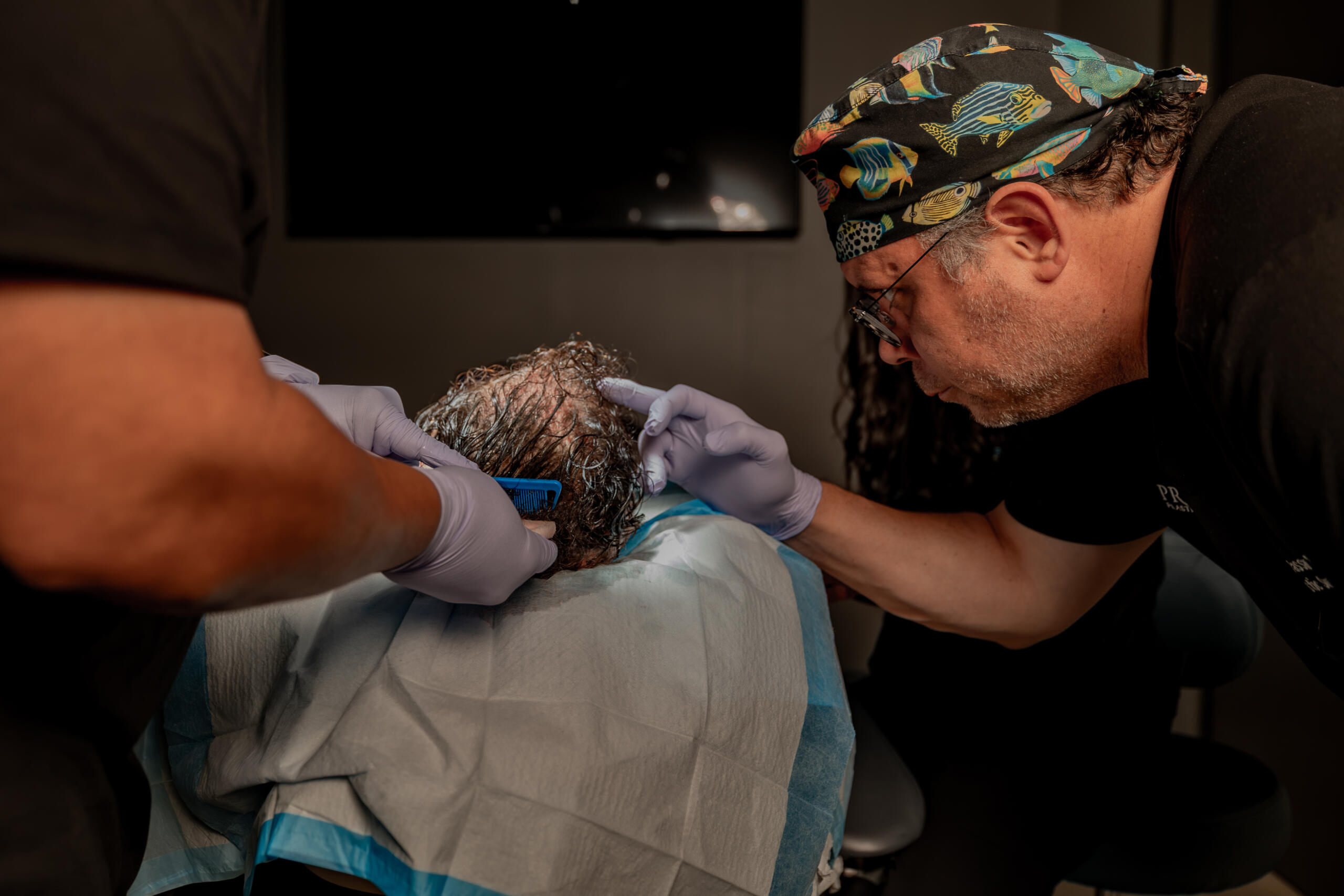
What Is FUT / Strip Scar Revision?
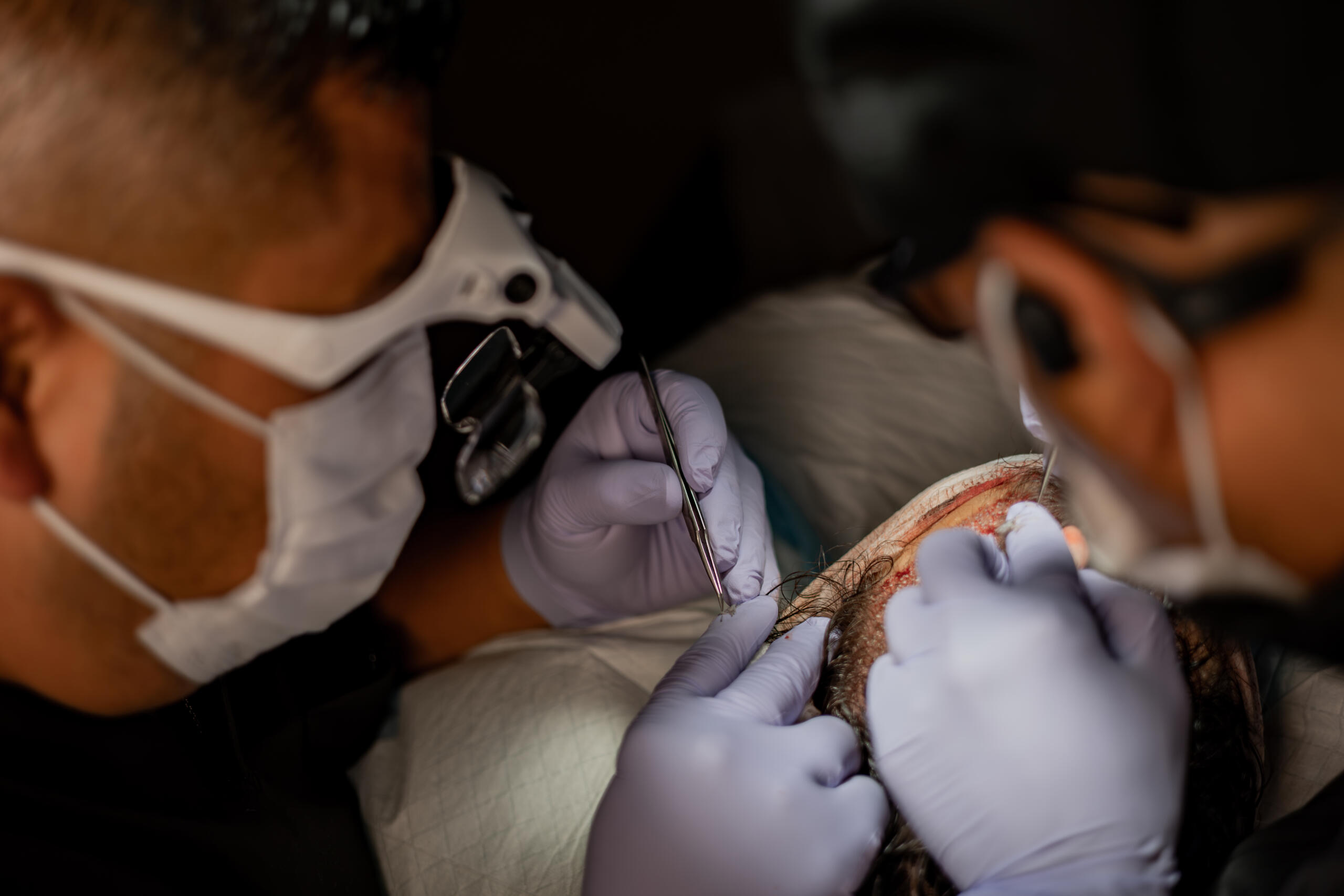
How Strip Scars Happen
To understand why revision is such a sought-after procedure among FUT patients, it helps to understand what strip surgery actually does to the scalp. In this procedure, the surgeon cuts out a strip of hair-bearing tissue, usually from the back or sides of the head, then pulls the remaining skin together under tension to close the gap.
The tension is the root of the problem; it is a major factor in determining what the scar ends up looking like. Some scars are reasonably thin and faint, but in many cases, the strip method leaves wide, painful, rope-like scars that patients have to deal with for years to come.
A few things tend to go wrong with this approach over time:
- The scar can stretch or widen years after the original surgery, especially in patients with tighter scalps or a lot of tension at closure
- Hair doesn’t grow through the scar tissue itself, so short haircuts and buzzed styles tend to reveal a pale, hairless band across the donor area
- Some patients develop a raised, thickened (hypertrophic) scar rather than a flat one
- Nerve irritation, numbness, or a tight, uncomfortable sensation at the back of the scalp is common and can linger for years
Dr. Heil hasn’t performed the strip procedure himself since more advanced approaches came along, but he regularly sees the aftermath of it in patients who had the surgery elsewhere. Oftentimes, strip scar patients underwent the original procedure decades ago, and are only now learning that something better exists. According to the International Society of Hair Restoration Surgery, repair and revision cases have been climbing steadily as more patients seek out corrections to earlier work.
The PCHR Approach to Scar Revision
Dr. Heil treats every strip scar as a completely distinct case affected by unique circumstances, because that’s what these cases are. He carefully evaluates the scar’s width, texture, and age before recommending a path forward. In some cases, re-excising the scar under lower tension produces a narrower result than the original closure, since the surgical conditions can be more favorable the second time around.
More often, though, Dr. Heil uses FUE technology to punch directly into the scar tissue itself. This process softens the scar’s texture, stimulates new blood vessel formation (angioneogenesis) in an area that typically has poor circulation, and allows for grafts to actually be placed within the old scar.
Are You a Candidate for Strip Scar Revision?
Most patients who come in for strip scar revision fall into one of two major groups: people whose scar has widened or become more visible over time, and people who simply want to enjoy more flexibility with their hairstyle options than a linear scar allows. You may be a good candidate if any of the following apply to your situation:
A consultation with Dr. Heil is the only way to know for certain what a revision could accomplish for your specific scar. Scalp laxity, scar age, and the extent of the original surgery all play key roles in determining what a realistic approach looks like for you.
Widening or More Visible Scar
You had a strip (FUT) procedure in the past, and the scar has become wider, thicker, or more visible with age
Wanting to Wear Hair Shorter
You want to wear your hair shorter, but feel restricted by a scar that shows through
Tightness, Tingling or Numbness
You experience tightness, tingling, or numbness around the old incision site
Self-Consciousness About the Donor Area
You’re self-conscious about the appearance of your donor area, even when your hair is styled to cover it
Your FUT / Strip Scar Revision Experience at Premier
Step 1:
Consultation
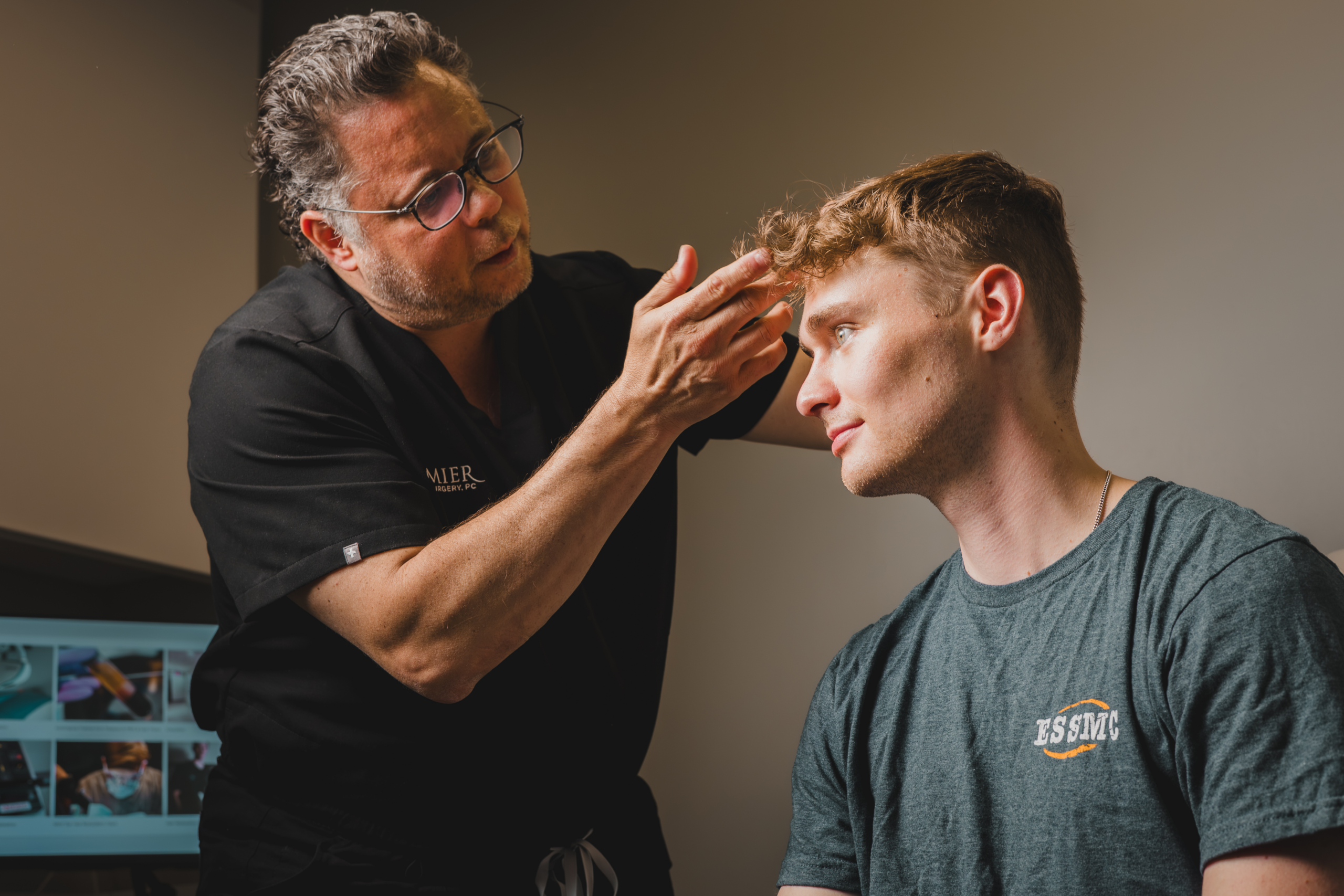
Every strip scar revision at the Center for Hair Restoration begins with a hands-on evaluation. Dr. Heil examines the scar’s width and texture and asks about your goals: are you hoping to wear your hair shorter, reduce visible tightness, or simply improve how the area looks and feels? From there, he’ll walk you through whether re-excision, FUE-based softening, graft placement into the scar, or some mix of these approaches makes the most sense.
Step 2:
Treatment
If the plan involves punching into the scar with FUE, Dr. Heil uses the same FUE technology employed in standard hair restoration procedures to create tiny openings directly within the scar tissue. This physically breaks up the dense, fibrous texture that makes scar tissue look and feel different from the surrounding scalp while also triggering the formation of new blood vessels in tissue that is usually starved for blood flow.
Scar tissue is notoriously hard to transplant into, because grafts placed in poorly vascularized areas often fail to survive. By improving blood flow first, Dr. Heil is able to place grafts into the scar with a meaningfully better chance of the hair actually growing.
Step 3:
Recovery
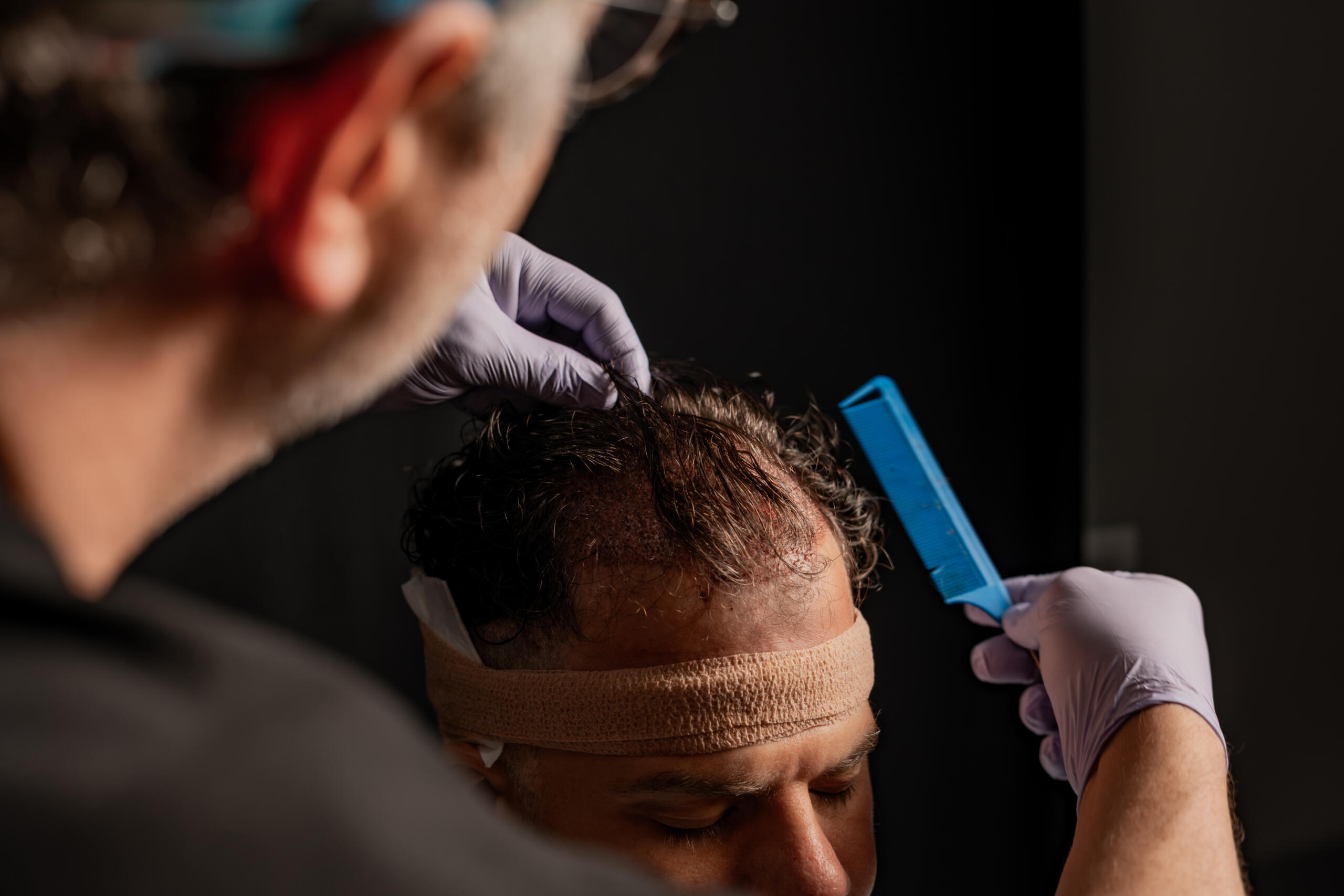
As for the recovery process, it tends to mirror what you’d expect from a standard FUE session. You can expect some redness and mild scabbing in the treated area for the first week or so, minimal downtime, and gradual improvement in the scar’s appearance and texture over the following months as the tissue heals and any transplanted grafts establish themselves.
Why Trust PCHR for FUT / Strip Scar Revision?
Scar revision is not a simple procedure with a set template. It requires an understanding of wound healing, scalp anatomy, and graft survival that goes well beyond a standard transplant, which is exactly why patients from across Pennsylvania, Ohio, and West Virginia travel to see Dr. Brian Heil for this specific problem.
Dr. Heil is a board-certified plastic surgeon (American Board of Plastic Surgery) and a Fellow of the American College of Surgeons, with more than two decades of dedicated hair restoration experience. He’s been recognized as a “Top Beauty Doctor” by New Beauty Magazine for five years running. He’s also ranked third in the country for robotic hair transplantation with Venus Concepts, and PCHR remains the only provider of the ARTAS robotic system in the tri-state region.
A few things separate the PCHR approach from what you’ll find at a high-volume transplant clinic:
- Dr. Heil hasn’t performed the outdated strip procedure himself in years, precisely because he’s watched too many patients deal with its aftermath. His entire scar revision approach exists to correct someone else’s linear closure.
- Our team doesn’t split grafts to inflate the graft count, a shortcut that some clinics use to make numbers look better on paper. Blood flow is already limited inside a scar, which is why placing unsplit grafts is that much more vital.
- Every plan is built around what your specific scar looks like and what you actually want, not a generic protocol.
If you had your original strip procedure somewhere else and you’re not sure whether revision is even possible for your scar, this is exactly the kind of question a consultation is built to answer.
Ready to Talk About Your Scar?
You are not forced to simply “live with” an unsightly scar, thanks to strip scar revision. Dr. Heil will walk you through what’s realistic for your situation. Call Premier Center for Hair Restoration at 412-709-3067 to schedule a consultation, or reach out online to get started.
Frequently Asked Questions
Can a strip (FUT) scar be completely removed?
Not usually. Scar tissue itself doesn’t disappear, but its width, texture, and visibility can improve a great deal through re-excision, FUE-based softening, and graft placement into the scar. Most patients see a scar that’s noticeably thinner, flatter, and less obvious, rather than one that actually disappears.
Is scar revision painful?
Both re-excision and FUE-based scar revision are performed under local anesthesia, so discomfort during the procedure itself is minimal. Afterward, most patients describe sensations similar to a standard FUE recovery: some tightness, mild soreness, and light scabbing for about a week.
How long until I see results?
If the revision involves grafts placed into the scar, new growth follows a similar timeline to any hair transplant, with initial shedding, a dormant period, and visible new hair emerging over six months to one year. Softening and blending of the scar’s texture is often noticeable sooner, within the first few months of healing.
Will my scar widen again after revision?
Widening is less likely after a well-planned revision, particularly when re-excision is performed under lower tension than was applied in the original procedure. That said, no surgeon can guarantee a scar will never change over time, which is part of why an individualized evaluation matters so much before moving forward.
Do I need to grow my hair out before a consultation?
No. Dr. Heil can evaluate your scar and discuss your options at any hair length. If you’re currently wearing your hair longer specifically to hide the scar, that’s useful information for the consultation, but it isn’t a requirement to schedule one.
Can women get strip scar revision, too?
Yes. While strip scars are more commonly associated with older transplants performed on men, women who have had FUT procedures or who have linear scarring from other prior scalp surgeries can also be candidates for this procedure. The evaluation process is the same regardless of gender.
What if I don't know which technique was used in my original surgery?
That’s fairly common, especially with procedures performed years ago or overseas. Dr. Heil can usually determine the technique used simply by examining the scar’s shape and characteristics during your consultation, so not knowing the specifics beforehand doesn’t necessarily prevent you from getting started.
Begin your Hair Restoration Journey Now
Whether you are just beginning to explore options or ready to schedule,
Premier Center for Hair Restoration is ready to help.




Brian Vassar Heil, MD, FACS has either authored or reviewed & approved this content