Premier Center for Hair Restoration
About Hair Loss
About Hair Loss
Most people notice hair loss gradually, and the signs are subtle at first. It often starts out as just a little more scalp showing at the part line. The hairline might seem slightly further back than it was a few years ago. Even though no single day presents an emergency, that in itself is the problem: it’s almost too gradual for you to sound the alarm until it feels too late.
Especially at this stage of hair restoration treatments, you can take heart in knowing that even cases of hair loss that have progressed over several years can still be effectively managed. But before we talk about solutions, it helps to understand what’s actually happening, because hair loss is not a single condition. It’s a broad category, and the type you’re experiencing is a major determinant of the treatments you may be eligible for.
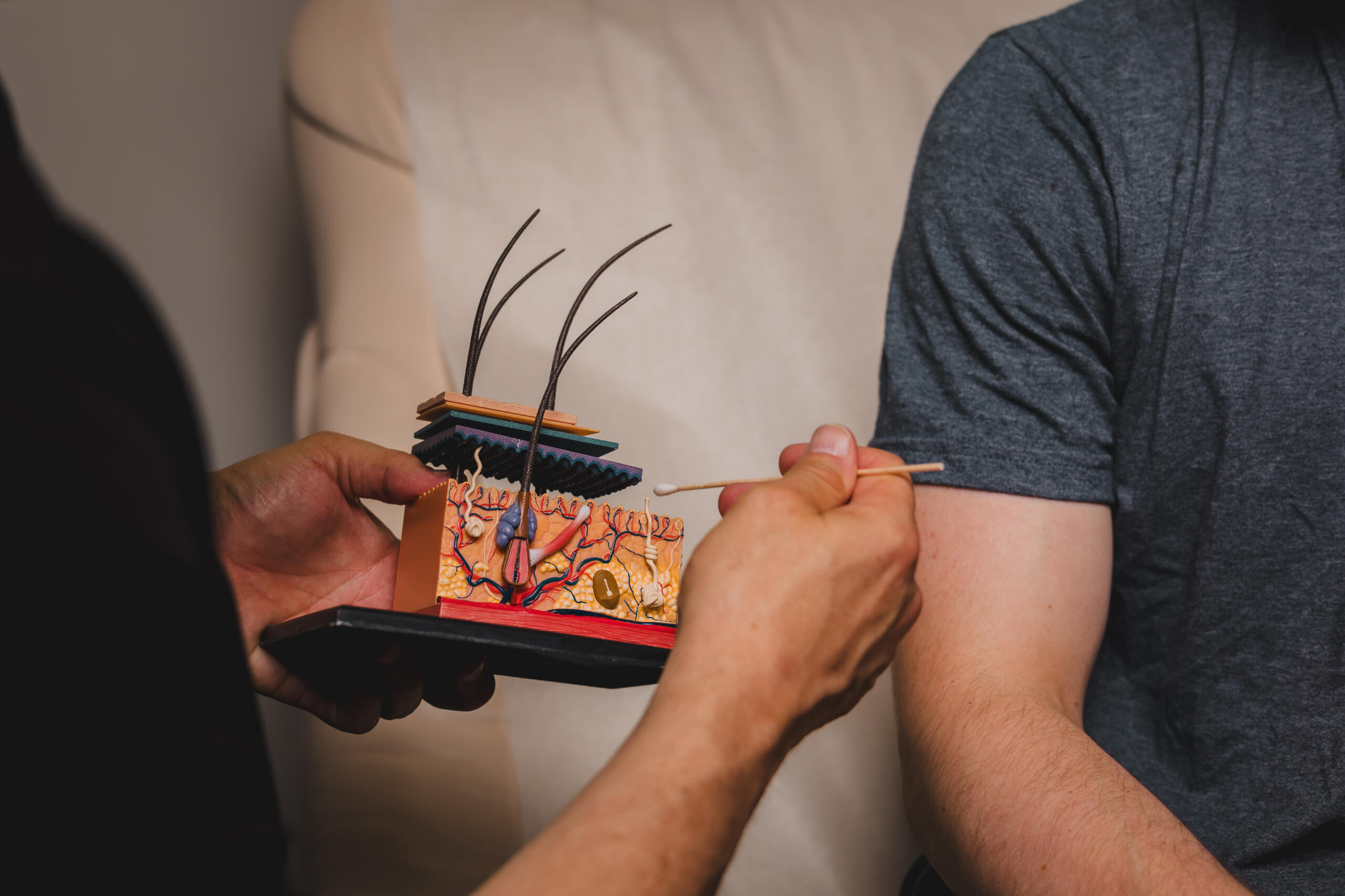
What Is Hair Loss, and How Common Is It?
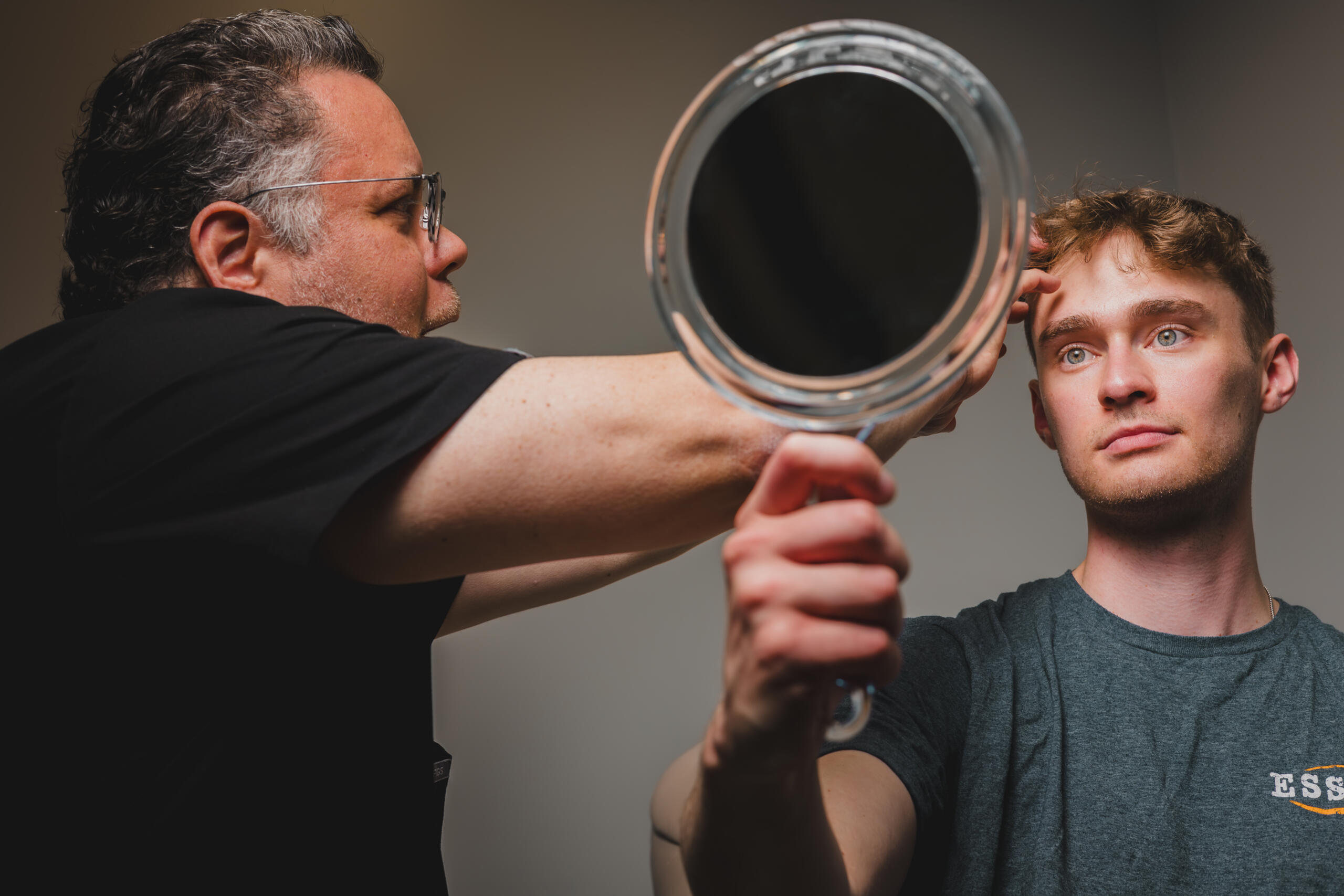
What Is Androgenetic Alopecia
(Male and Female Pattern Hair Loss)?
Androgenetic alopecia is by far the most common form of hair loss in both men and women. If your hairline is receding at the temples, the crown is thinning, or you’re noticing a widening part line, this is likely what you’re dealing with.
The mechanics behind it primarily comes down to a hormone called dihydrotestosterone, or DHT. In people who are genetically predisposed to hair loss, DHT binds to receptors in hair follicles and triggers a process called miniaturization. Over time, affected follicles produce thinner, shorter, weaker strands until they stop producing hair altogether. The follicles don’t die; they instead become dormant. Without intervention, they don’t come back on their own.
In men, the pattern typically follows the Norwood Scale: recession at the temples and thinning at the crown, which can eventually merge into more extensive loss. In women, the Ludwig Scale describes a different pattern in which diffuse thinning spreads outward from the part, usually without a fully receding hairline. Some women, however, experience a more masculine-pattern loss with rising temples.
Both are primarily hormone driven, and thankfully, both are treatable.
What Are Other Common Types of Hair Loss?
Androgenetic alopecia accounts for the majority of cases, but it’s not the only cause. Other types worth knowing include:
Telogen effluvium
Occurs when a physical or emotional stressor (e.g., surgery, illness,
childbirth, extreme weight loss, or prolonged stress) pushes a large number of follicles into a resting phase at the same time. The shedding typically appears two to three months after the triggering event. In many cases, it’s temporary, but chronic telogen effluvium can persist.
Traction alopecia
Develops from repeated tension on the follicles, often caused by tight
braids, extensions, dreadlocks, or any other style that pulls on the hairline over time. If caught early, the damage is often reversible. Left untreated, it can become permanent.
Alopecia areata
is an autoimmune condition in which the body attacks its own hair
follicles, causing patchy hair loss that can appear suddenly. In some cases, it progresses to complete scalp loss (alopecia totalis) or total body hair loss (alopecia universalis). When the condition has stabilized, hair restoration becomes an option.
Scarring alopecias
are a category of conditions, including lichen planopilaris and frontal
fibrosing alopecia, where inflammation damages and permanently destroys the hair follicle. These require careful medical evaluation before any restoration is considered. As Dr. Brian Heil, MD, FACS, explains: “Transplanting into active scarring alopecia is putting
logs on the fire — it destroys what you put in.” Ruling out scarring alopecia with a biopsy is a non-negotiable first step in unusual or progressive cases.
Medical causes
such as hypothyroidism, lupus, iron deficiency, and other systemic
conditions can contribute to hair loss and should be investigated, particularly when the pattern is diffuse or atypical.
Does Hair Loss Only Affect Older Men?
While the statistics are skewed in that direction, older men are certainly not alone in the struggle against hair loss. By age 50, roughly half of all men have some degree of male pattern hair loss. By 70, that number climbs above 70%. But androgenetic alopecia can begin as early as the late teens or early twenties. Norwood Stage II loss in a 24-year-old is not uncommon. Age is a factor in treatment planning, but it’s not a barrier to getting help.
Women are significantly affected, too. Female pattern hair loss impacts an estimated 40% of women by age 50 and becomes increasingly prevalent after menopause, when falling estrogen levels reduce the counterbalancing effect on DHT. Many women go years without a proper diagnosis because female hair loss doesn’t always follow the obvious, well-documented patterns that make it easy to identify hair loss in men.
Misconceptions
Why Do So Many People Avoid or Delay Hair Restoration Treatment?
Millions of people are bothered by hair loss but never take action. The reasons are often a mix of psychological and practical factors, and unfortunately, misconceptions about modern hair restoration treatments often prevent those who would have otherwise sought treatment from doing so.
Misconception #1
You Will End Up With Obvious Plugs or Visible Scarring
This is probably the most pervasive misconception in the industry, and it’s rooted in the reality of outdated methods and poor, inexperienced provider technique. Hair transplantation of decades past involved strip harvesting: cutting a linear section of scalp from the back of the head and leaving a permanent, often painful scar. The resulting grafts in the front of the head were large and unnatural, often described as “doll hair” or a “corn row” effect.
Modern follicular unit extraction (FUE) is nothing like that. Individual follicles are removed one by one through tiny, circular incisions that heal within a day or two and leave no linear scar. The results, when performed by an experienced surgeon with an eye for artistic placement, are indistinguishable from natural hair growth. Dr. Heil is direct about this: “You don’t want to look like a newscaster from 30 years ago who hides his hair transplant under a hat.” The bar for what constitutes a good result is completely different now, and the treatments reflect that.
Misconception #2
Everyone Will Know You’ve Had Work Done
Modern techniques, particularly robotic and automated FUE, are designed with concealment in mind. To this day, people assume they’d have to show up to work with an obviously shaved head. That’s no longer the case. For example, with long hair FUE, the donor area can be harvested in a layered, selective fashion underneath existing longer hair. You can walk out the same day, ponytail your hair over the area, and return to a professional setting within days. Dr. Heil has had patients back in courtrooms, surgical suites, and classrooms within days of their procedure.
For men, the recovery period is also far shorter than most people assume. The shaved appearance at the donor area is temporary, and with proper aftercare guidance, most patients look presentable enough for regular activity within a week.
Misconception #3
It’s Painful and Requires Weeks of Time Off
Hair restoration procedures are performed under local anesthesia. Most patients describe the procedure itself as surprisingly comfortable. There is some expected tenderness in the days following, patients say that their scalp feels like they got a sunburn, but the recovery profile is nothing like traditional surgery. The dramatic downtime associated with older strip methods simply doesn’t apply to modern FUE.
What Treatments Are Available for Hair Loss?
Hair loss treatment broadly falls into two categories: preservation (slowing or stopping ongoing loss) and restoration (replacing what has already been lost). The best outcomes usually come from combining both.
Surgical Hair Restoration
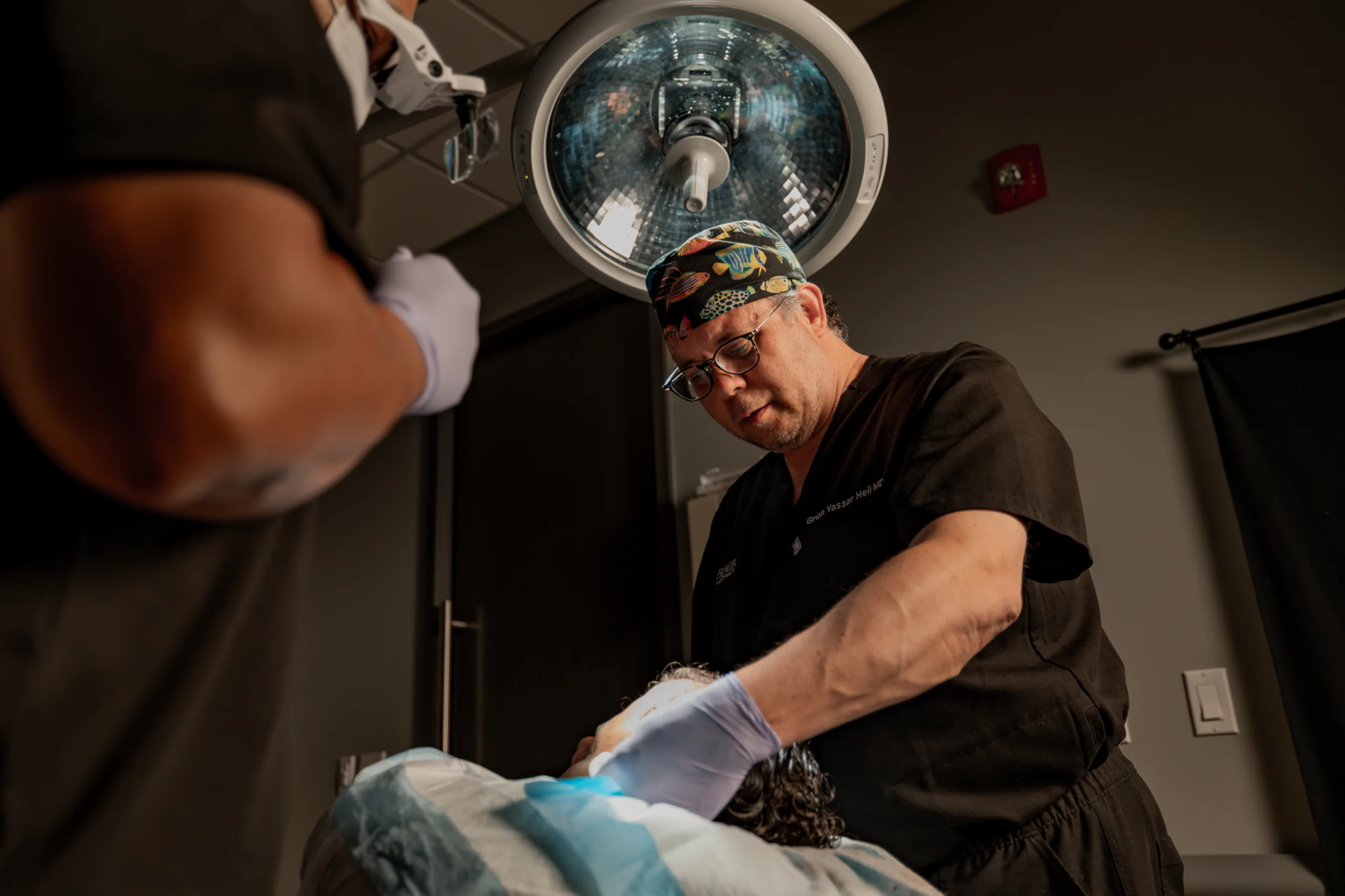
ARTAS iX Robotic FUE, NeoGraft Automated FUE, mega case transplants, long hair and limited shave procedures, secondary transplants, and complex specialty cases.
Non-Surgical Solutions

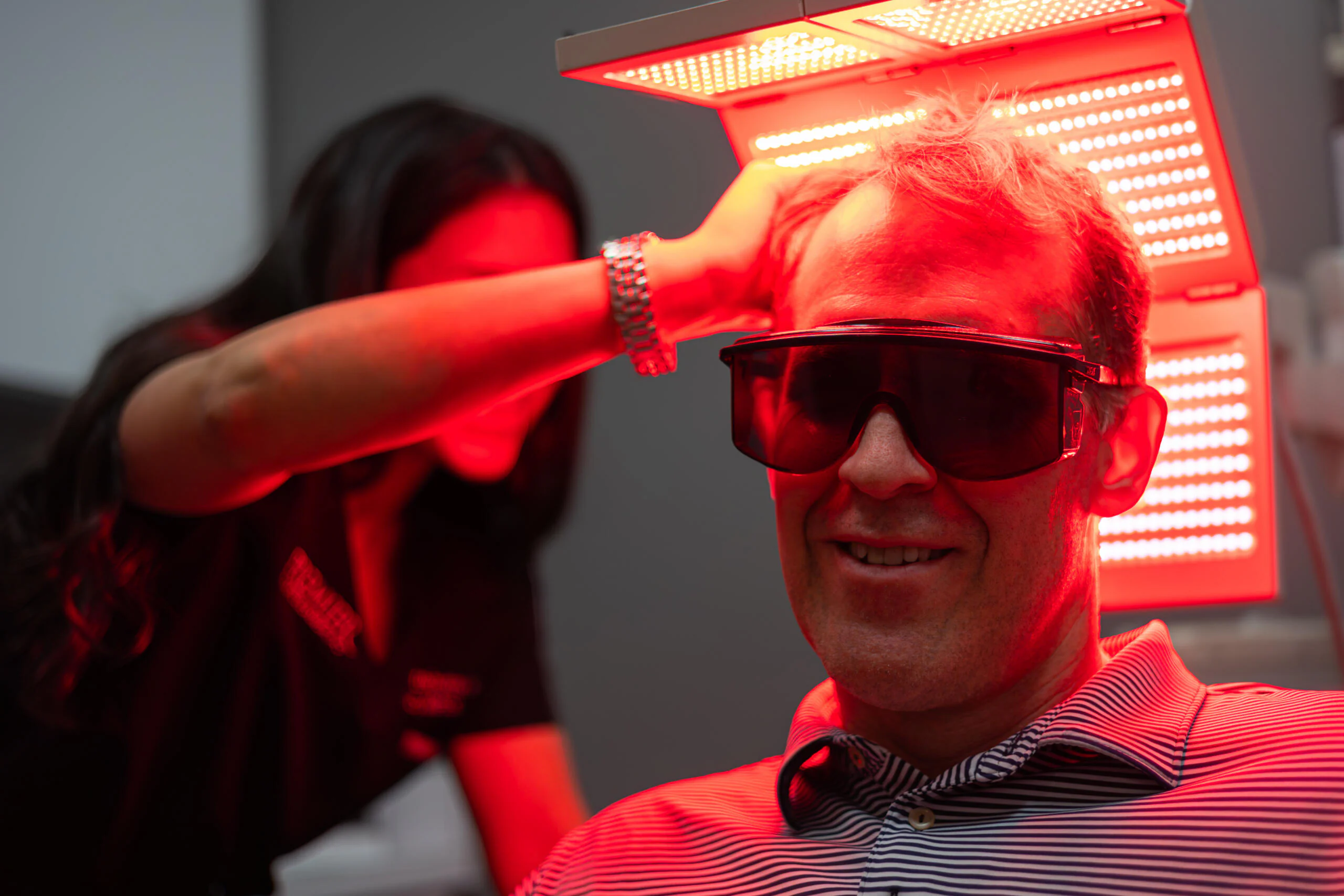
Platelet-Rich Plasma therapy, low-level light therapies, hair loss medications and
supplements, exosome therapy, and advanced scalp treatments.
Specialized and Custom Cases
Scar revision, FUT strip repair,
eyebrow and beard transplants, revision
of prior procedures, and complex multi-session planning.
Why Choose Dr. Heil for Hair Restoration?
Hair restoration is a field where experience and artistry matter as much as technology. Many can operate a machine. Fewer people can design a hairline that fits your face, plan a multi-stage restoration that accounts for future loss patterns, and execute the work with the precision of a fellowship-trained plastic surgeon.
Dr. Brian Heil, MD, FACS is a board-certified plastic surgeon with over 25 years of dedicated hair restoration experience. He has been recognized by Castle Connolly as a Top Doctor for multiple consecutive years, named a Top Beauty Doctor by New Beauty Magazine five times over, and ranked third in the United States with Venus Concepts for robotic hair transplantation.
His approach to restoration is, as he puts it, patient-first from start to finish: “Everything we do is very patient-focused. It begins and ends with the patient. What are their needs, their desires, their history? What does their scalp and hair look like — where do they have hair, where have they lost it, where is their scar tissue? We work from that to find the right proposed solutions.”
That philosophy shows up in the way consultations are structured, the way treatment plans are built, and the outcomes patients experience. Whether you’re looking at your first procedure or addressing the aftermath of a bad result from somewhere else, the starting point is always an honest assessment of where you are and where you want to go.
Premier Center for Hair Restoration is located in Pittsburgh and serves patients throughout Pennsylvania, Ohio, and West Virginia, with patients also traveling from out of the region for Dr. Heil’s expertise.

You Are Not Powerless Against Hair Loss
You now have better tools at your disposal than ever before to effectively reverse hair loss without significant side effects or discomfort. The field has changed, and with it, the technology and outcomes have dramatically improved.
If you’ve been watching your hairline change and wondering whether now is the time to find out what your options actually are, the answer is very often yes: earlier intervention almost always produces better outcomes. A consultation with Dr. Heil will reveal which approach is right for you and how to get the long-term results you’re looking for. Financing is available through CareCredit with 12 months of no interest.
Begin your Hair Restoration Journey Now
Whether you are just beginning to explore options or ready to schedule,
Premier Center for Hair Restoration is ready to help.




Brian Vassar Heil, MD, FACS has either authored or reviewed & approved this content